![]() |
Providing the Highest Standard of Care for Your Trees and Shrubs. |
![]() |
||
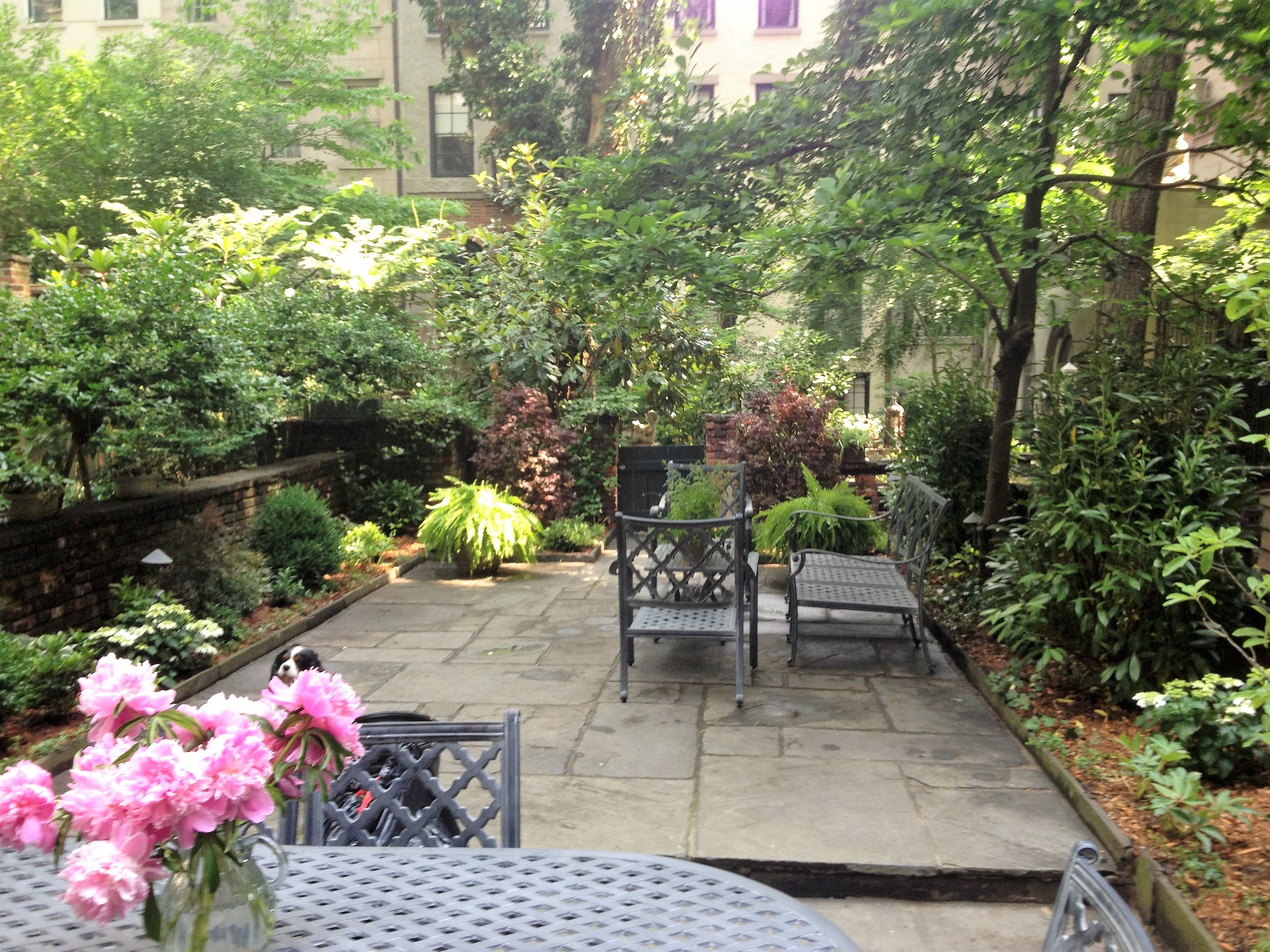
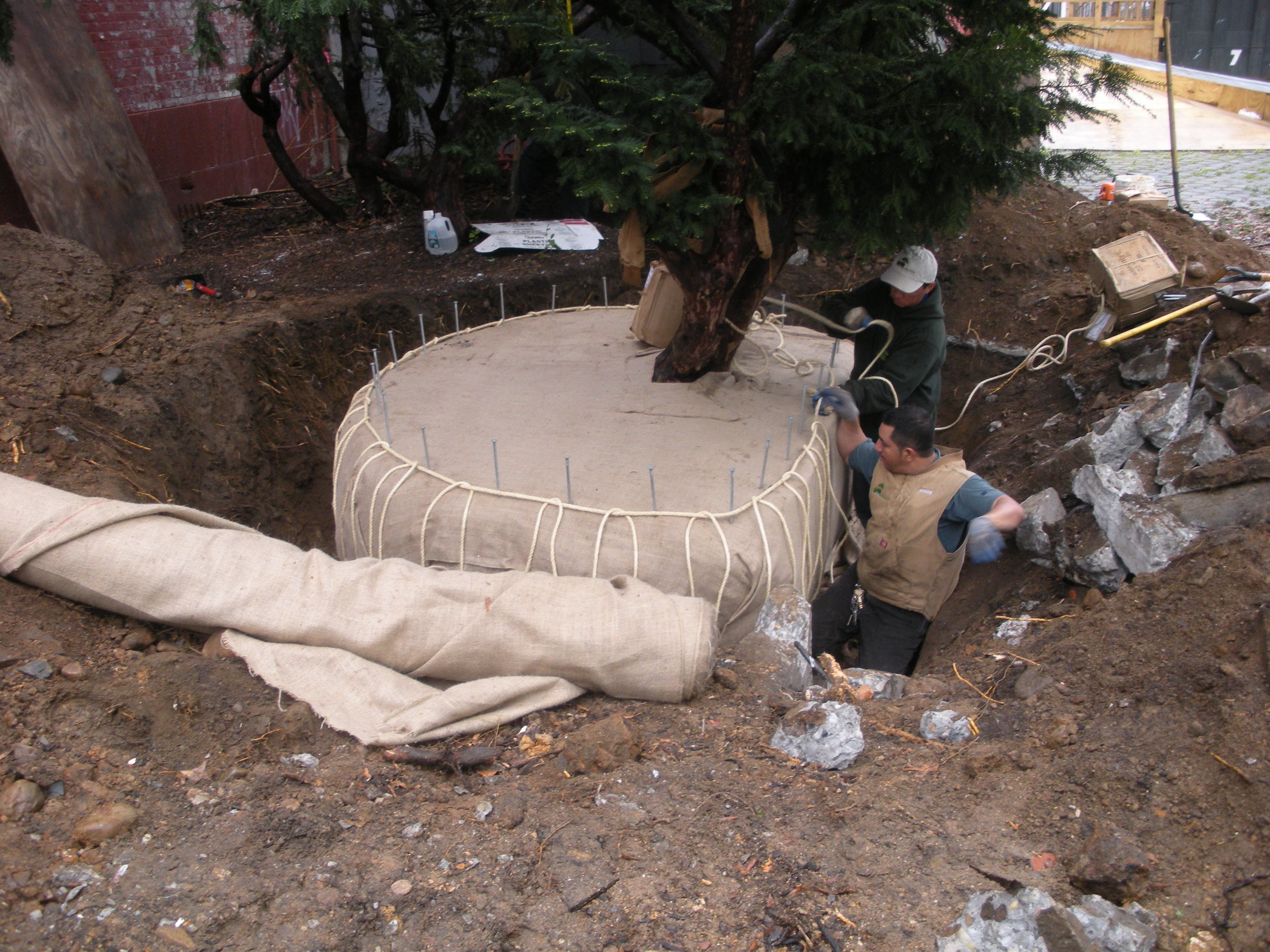
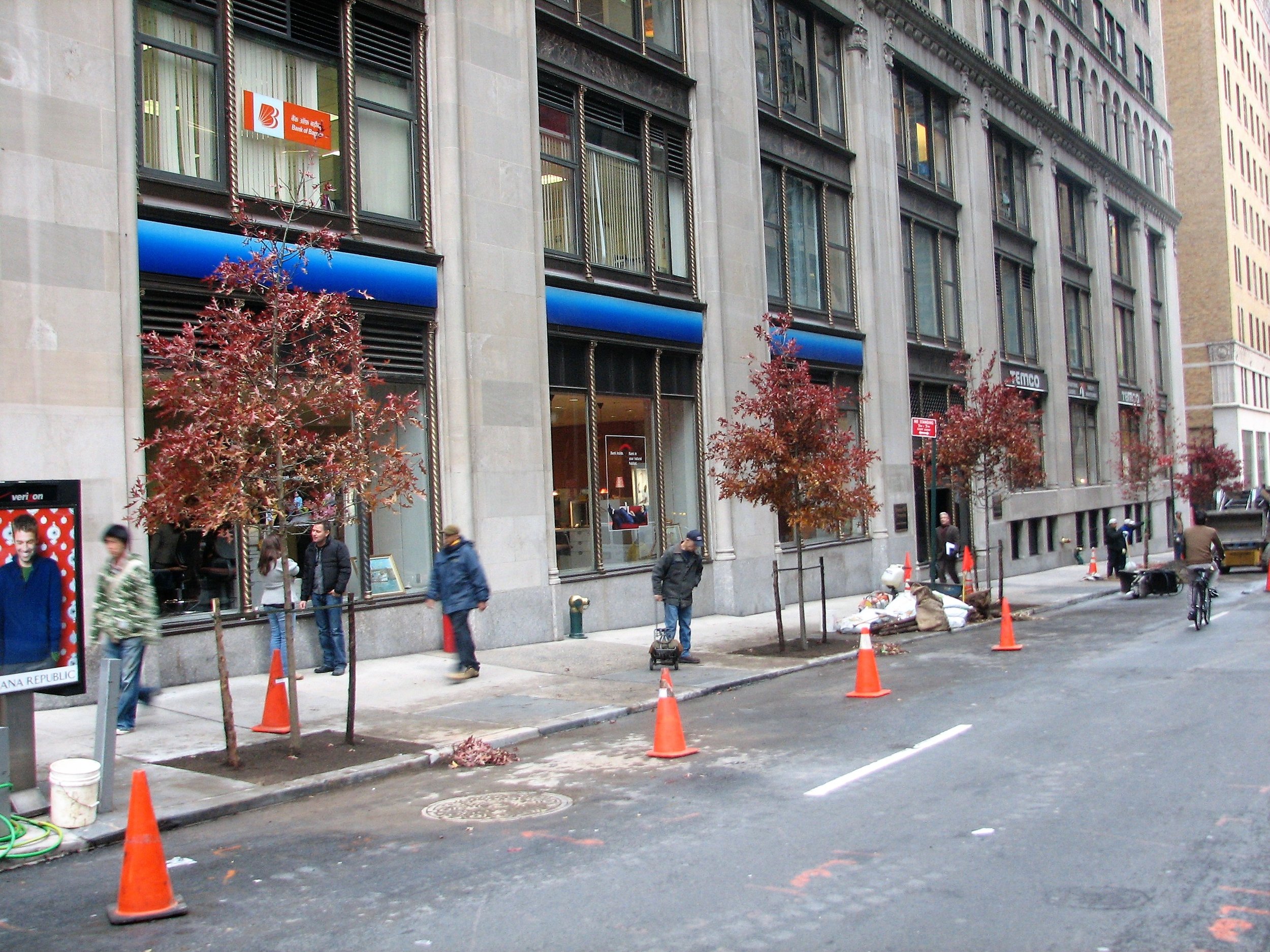
Urban ArboristsBill Logan founded Urban Arborists to care for trees and shrubs where they matter most: in cities and suburbs, where they are often people's chief link to the natural world. Throughout the tri-state area, from backyard gardens in Bed-Stuy, to Manhattan townhouses, to cathedral and museum grounds, to New York City streets, to Westchester homes and estates, Urban Arborists brings the highest standards of knowledge, attention and care to the woody plants that transform lots into landscapes, yards into gardens, streets into groves. Of InterestYou can now take a tree canopy walk four stories high and slide into a person-sized bird's nest at The Morris Arboretum. It's a great way to see trees the way birds (and arborists) see them.. To see great conifers, visit Bayard Cutting Arboretum in East Islip Swarthmore College, near Philadelphia, has one of the best arboreta in the East. The trees and shrubs are beautiful, well-labeled, and appropriately used in garden settings. For a wonderful day trip, take Amtrak to Philadelphia and the regional SEPTA line right to the Arboretum at the Swarthmore stop. Look at their website, Scott Arboretum If it's just too cold to admire trees outdoors, look at the lovely photographs by Larry Lederman in the Janet and Arthur Ross Gallery at The New York Botanical Garden.
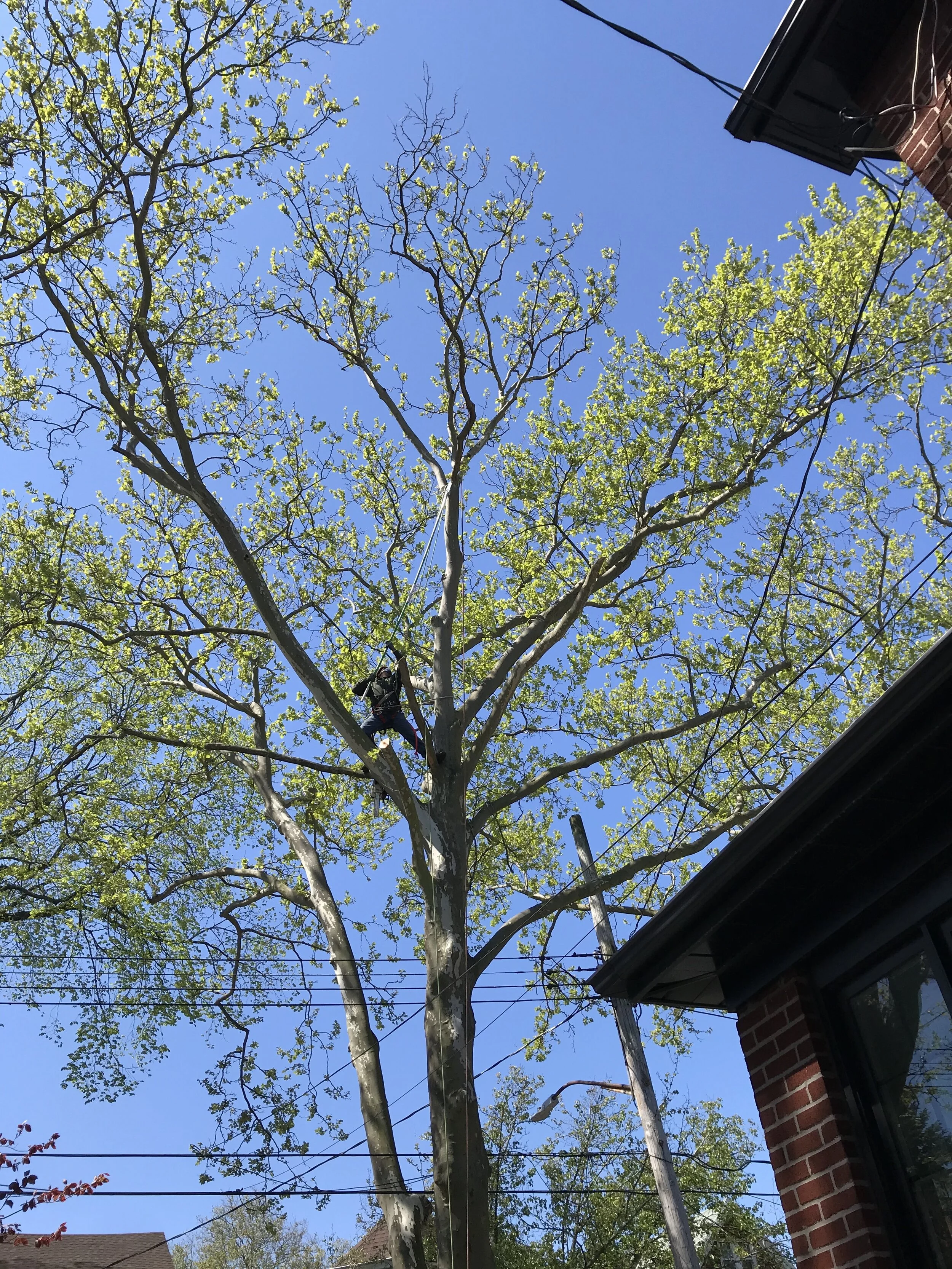
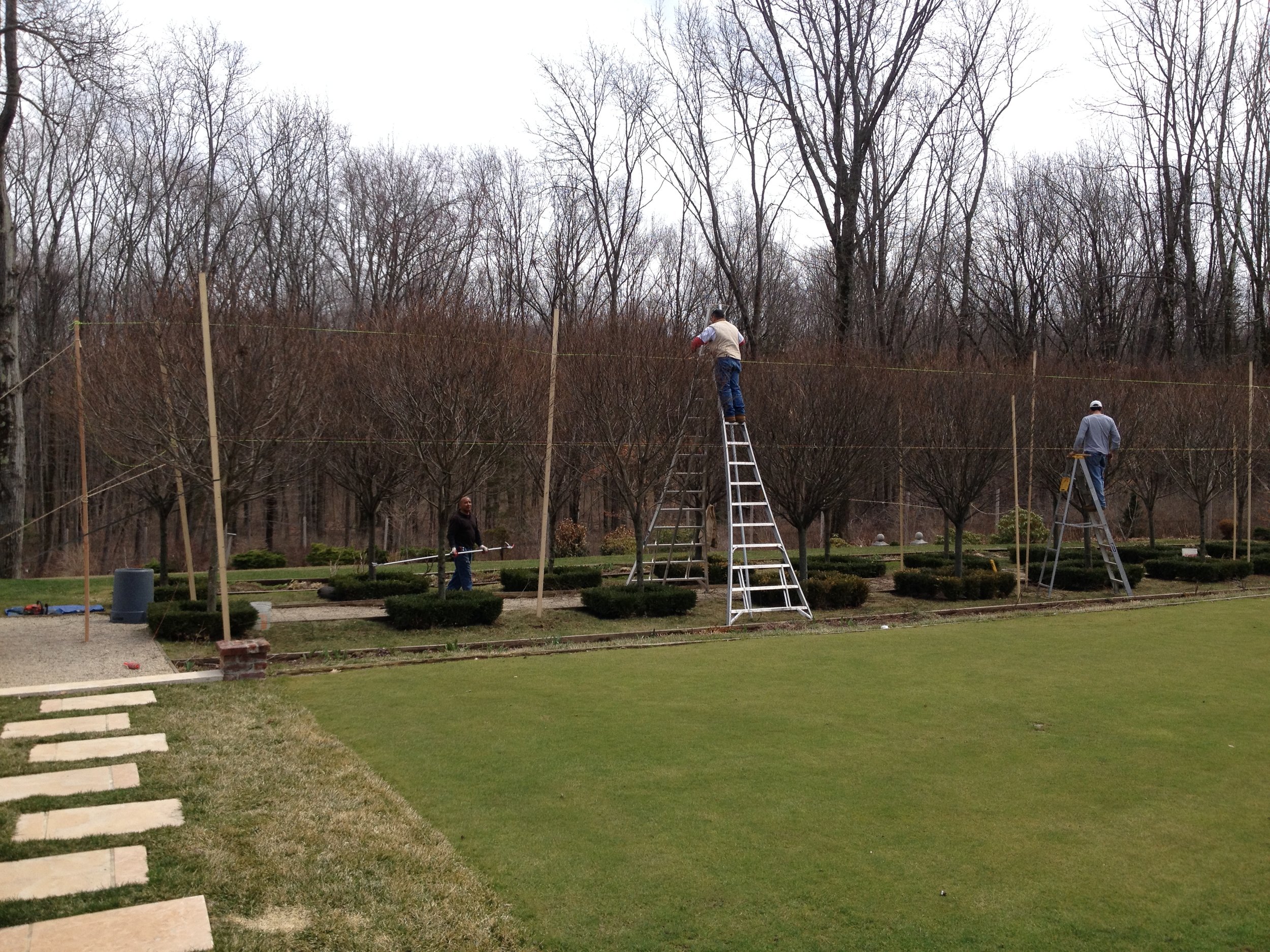
Seasonal ActivitiesWhat do we do in winter? This is the question that many of our clients ask. Most trees and shrubs are dormant, though evergreens will still carry on photosynthesis whenever the temperature is high enough. In dormancy, one supposes, the plants are mainly turned off, so why work? As it turns out, the dormant season is the best time to perform many of our routine pruning tasks. Everything is not indeed turned off, but processes are slowed and next year’s growth is safely stored away in buds. Most important, the pests and diseases that feed on growing plants are at their least active. Certain trees that are subject to devastating diseases – American elms, for example – should only be pruned in dormancy. Other trees and shrubs can also be pruned in dormancy with less concern for potential exposure to pests and diseases. The only exception to this rule are those that are subject to fungal canker diseases. A number of canker diseases are active in autumn, even after leaves fall, so such plants should be left until midwinter to prune. There is another advantage to dormant pruning, particularly for deciduous trees and shrubs. At this time of year, we can clearly see the structure of each plant and each stem. It is – often to our clients’ surprise – easier to identify weak, diseased and dead branches. It is also easier to envision a tree’s best future shape and so to direct it by structural pruning. In pruning trees, it is almost always better to prune smaller amounts more frequently, rather than large amounts at long intervals. The pruning wounds are smaller, and it costs the tree less energy to close them. Thus, there is less opportunity for pests and pathogens to become established. Also, smaller doses of pruning allow the arborist to fine tune the tree’s structure, both for beauty and for health. Give us a call. We will answer with alacrity! We ARE at work this winter. NewsUrban Arborists evaluates and protects the trees at Battery Park, the Queens Museum of Art, and the Staten Island Zoo. DIRT: THE MOVIE, a feature-length documentary inspired by Bill Logan's book DIRT, THE ECSTATIC SKIN OF THE EARTH is now available on DVD at the Dirt The Movie website.. Urban Arborists has begun working with Brooklyn composters Earth Matter. We now provide them with a steady supply of wood chips. The resulting compost goes to a local urban farm. We already recycle chips by using them as mulch. Perhaps soon we will be able to use a compost made from the trees we pruned! April 20, 2010 — Dirt The Movie will be shown nationwide on PBS as part of the Independent Lens series, at 10 PM. March 14, 2010 — Dirt The Movie will be shown on Sunday at 3 pm, with discussion after, at the Noguchi Museum. Bill Logan will teach the five-week course Pruning Principles and Practice at the New York Botanical Garden. There are two sections, one beginning January 23 and the other February 9.
March 27th — featured in the New York Times, Urban Arborists removes an ailanthus tree at the Noguchi Museum. Bill Logan gives commencement speech at NY Botanical Garden NYBG Graduation Speech [45 KB doc] |